

CASE 01 / 05 · 2025 · B2B WEB
Inhabitr · AI renovation estimates for hotel owners
Earn the number.
Pricing a hotel renovation used to take weeks of consultant work. I took INSCOPE from zero to a launched product, then used what version 1 taught us to rebuild it around what mattered most: trust in the number.
Visit the live product ↗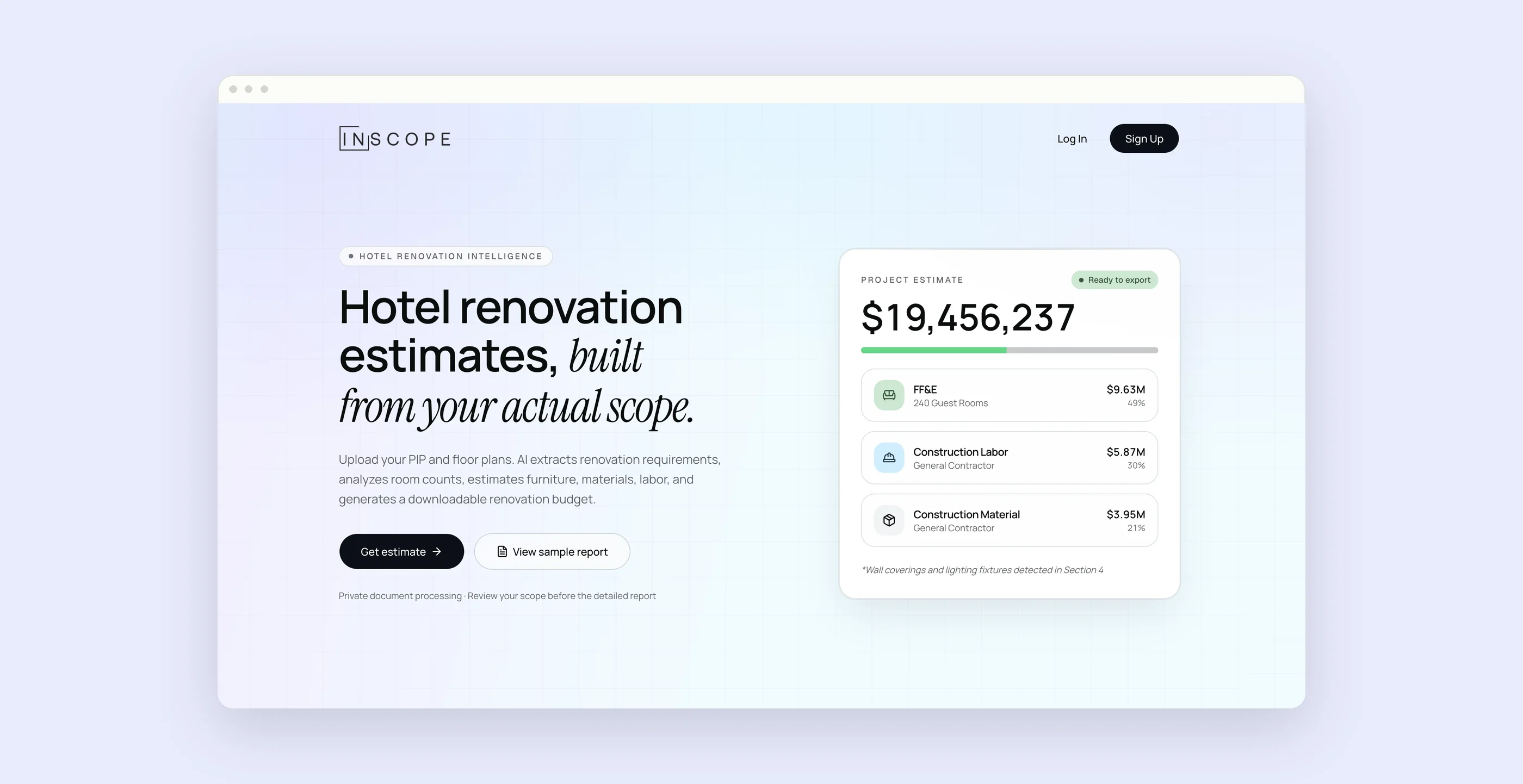
Problem
Owners waited weeks for a consultant’s renovation budget, and couldn’t verify the number they got.
What I did
Took INSCOPE from zero to launch with our PM, then rebuilt the core flow so owners check the AI’s inputs before they see a price.
Impact
~8 min
average to an initial estimate, in production
About 8 minutes on average in production to an initial estimate, 3 stages connected end to end, and a $499 premium report that made the AI estimate a paid product.

The core team.
01 › Context
A slow, expensive problem with no product
Before INSCOPE: owners turned documents and quotes into a budget spreadsheet by hand, over weeks.
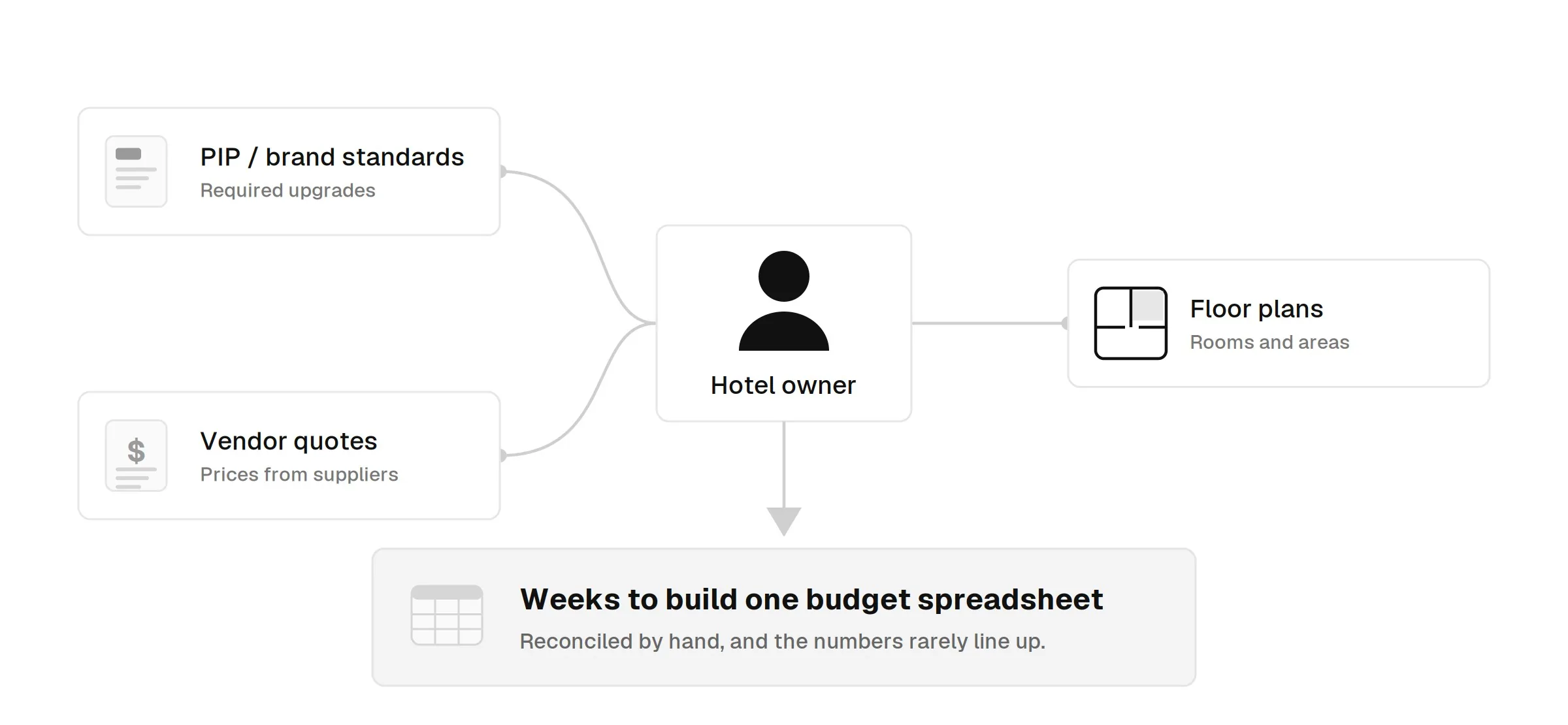
Before INSCOPE: owners turned documents and quotes into a budget spreadsheet by hand, over weeks.
Who it’s for: hotel owners facing a brand-required renovation, who need to know what it will really cost before they commit.
The key document: a PIP (Property Improvement Plan), the checklist of upgrades a hotel brand requires. The business bet: AI could turn it into a credible estimate in minutes, and owners would pay for the full report.
02 › Defining the product
Choosing what not to build
I narrowed version 1 to one job: a renovation budget an owner can trust enough to act on.
In version 1
- Upload a PIP and floor plans
- Review what the AI found
- Cost breakdown
- Paid full report
Deliberately left out
- Editing estimates
- Team collaboration
- Contractor bidding
Success metrics: flow completion, time to first estimate, paid report conversion. Constraints: messy documents, imperfect AI extraction, a small team.
03 › Version 1
Testing the core bet
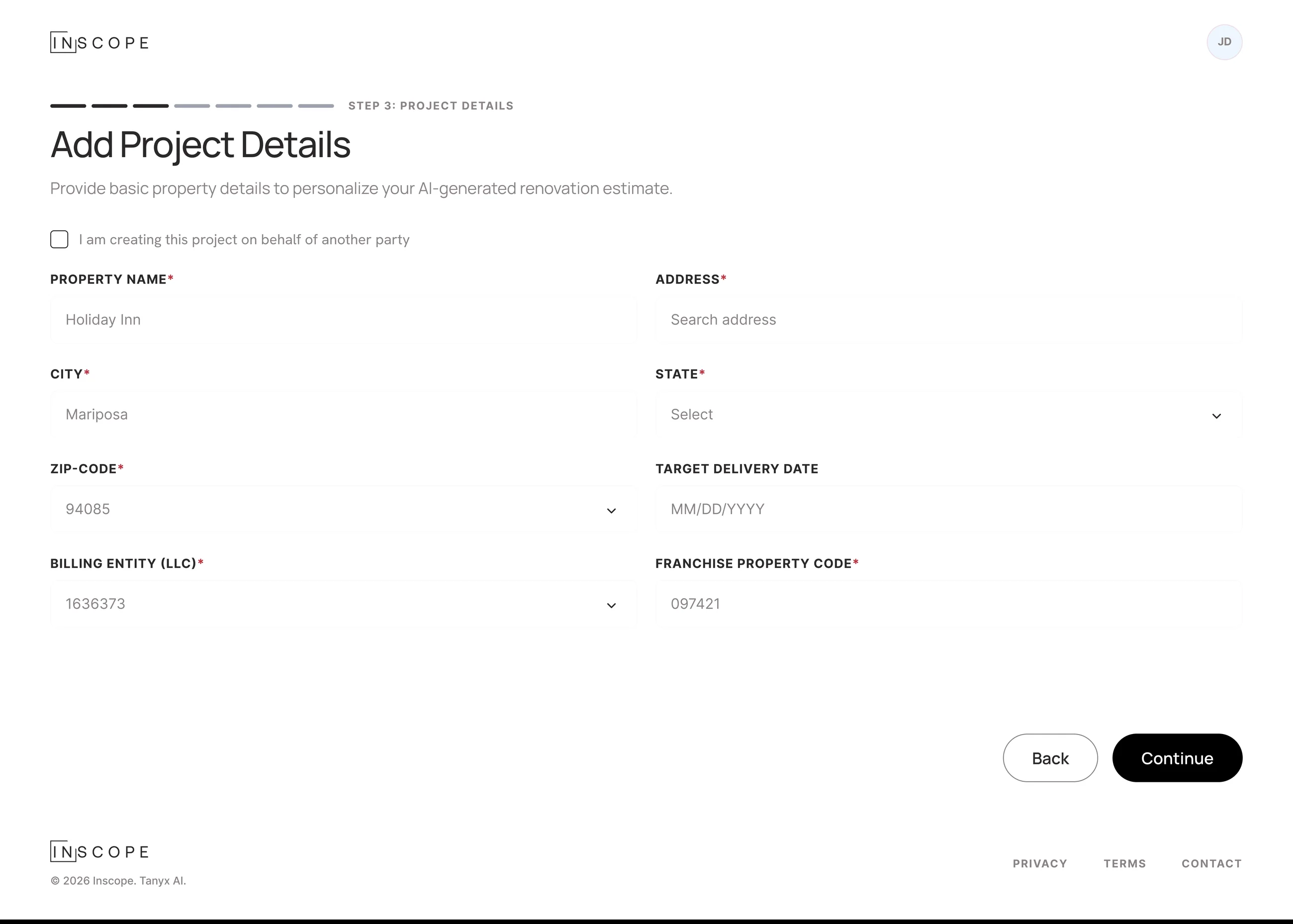
Add the property details that localize the estimate.
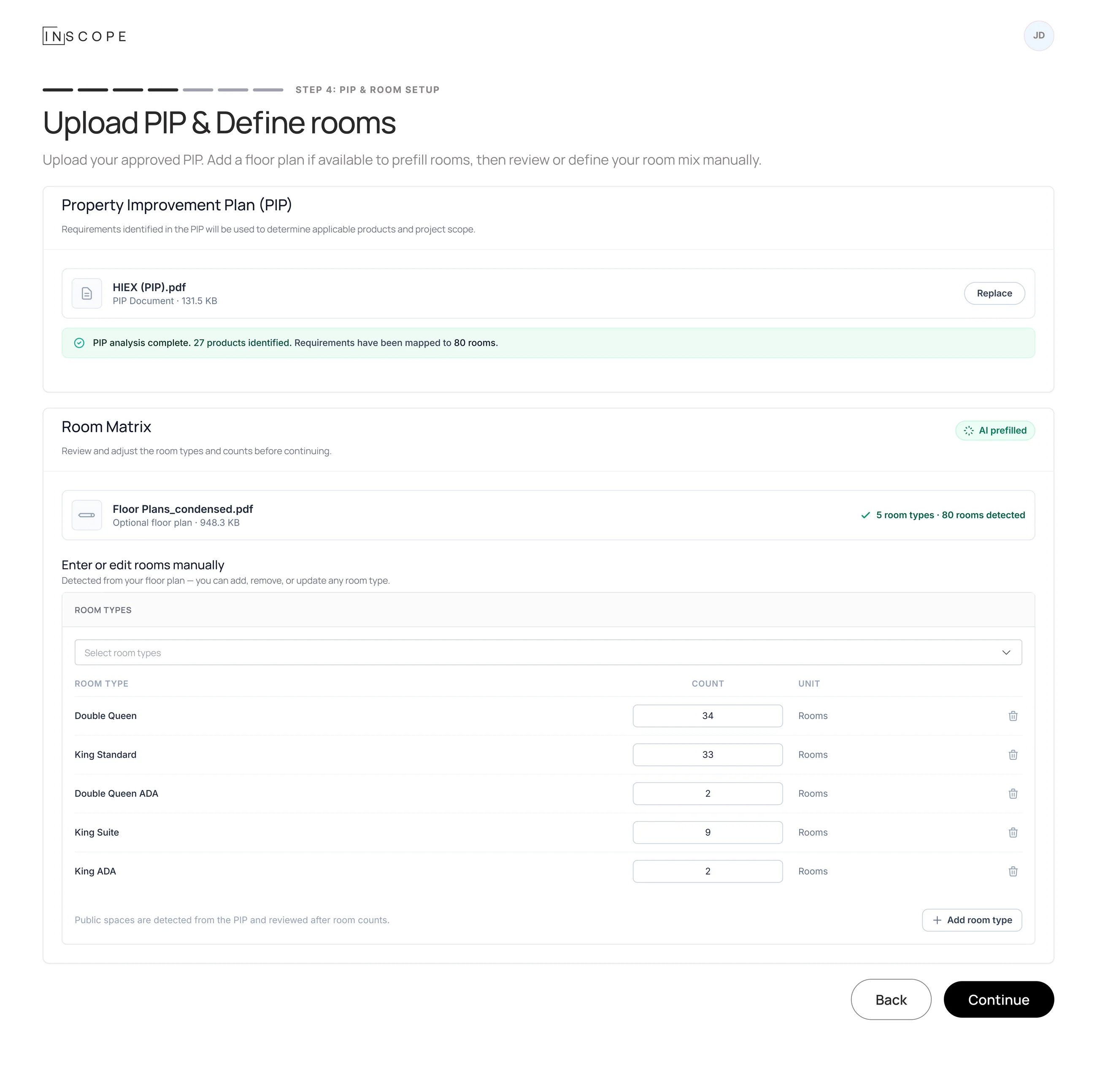
Upload a PIP and floor plans; AI reads both.
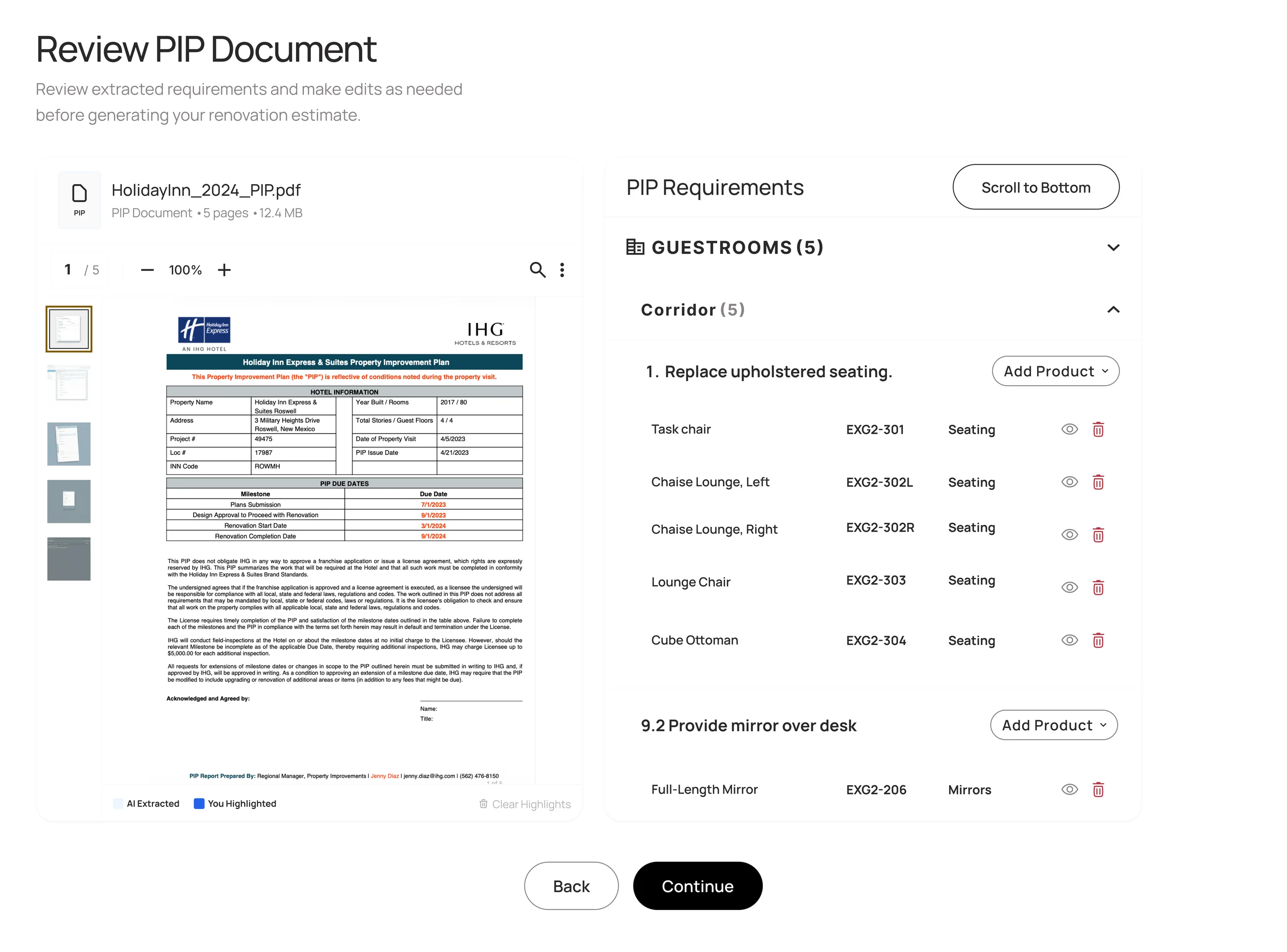
Review the requirements the AI found.
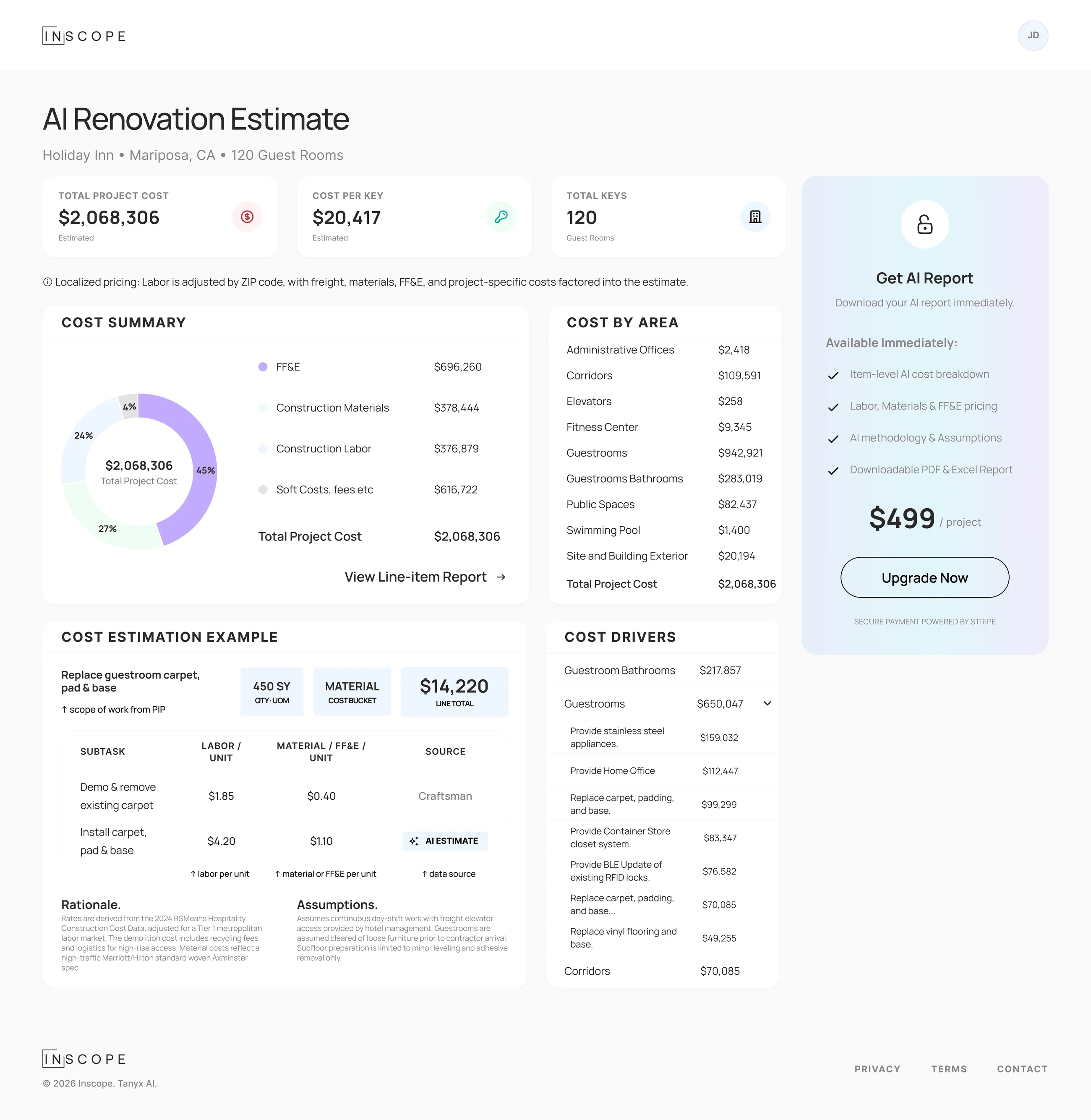
See the estimate, broken down by category and area.
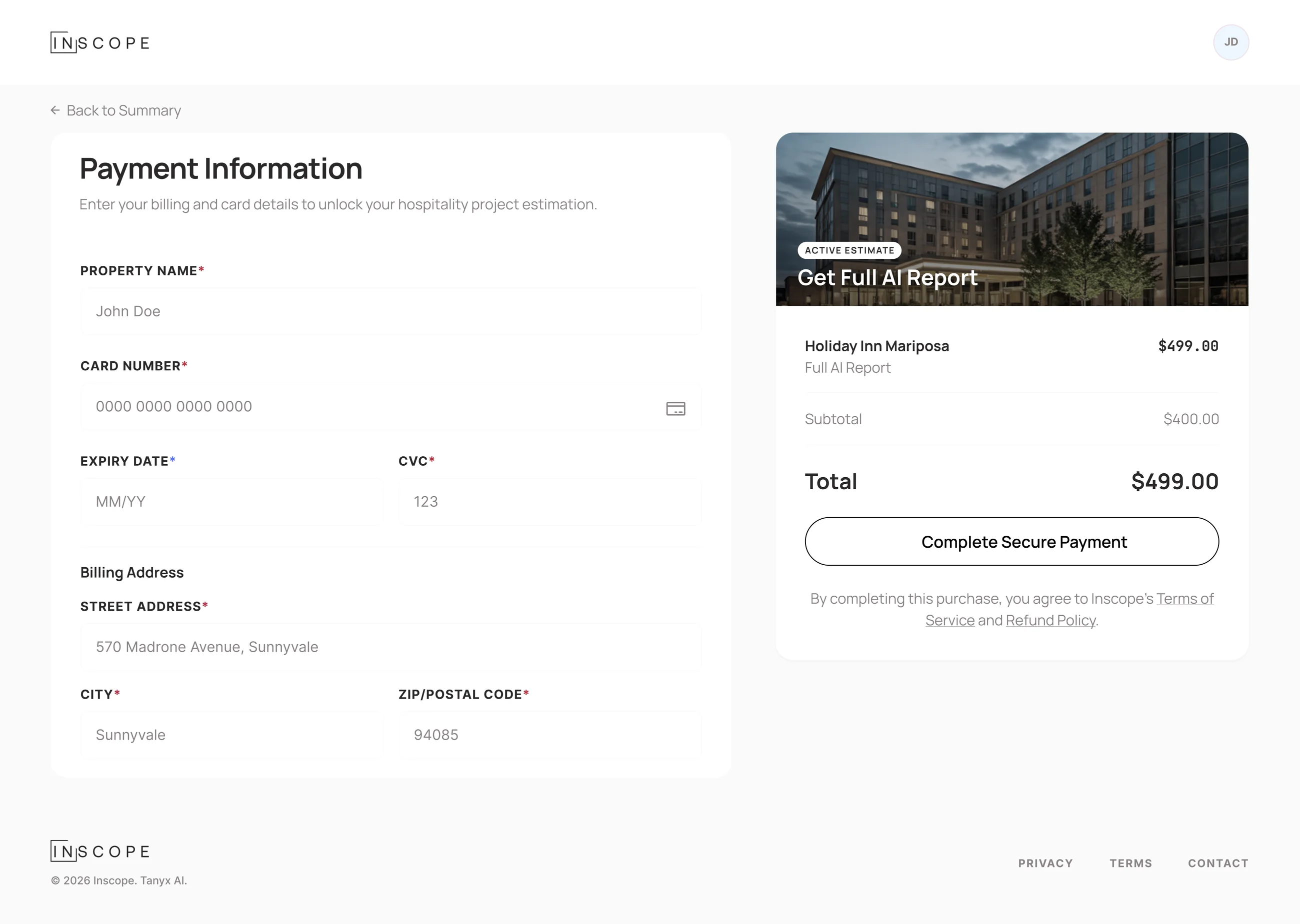
Pay to unlock the full AI report.
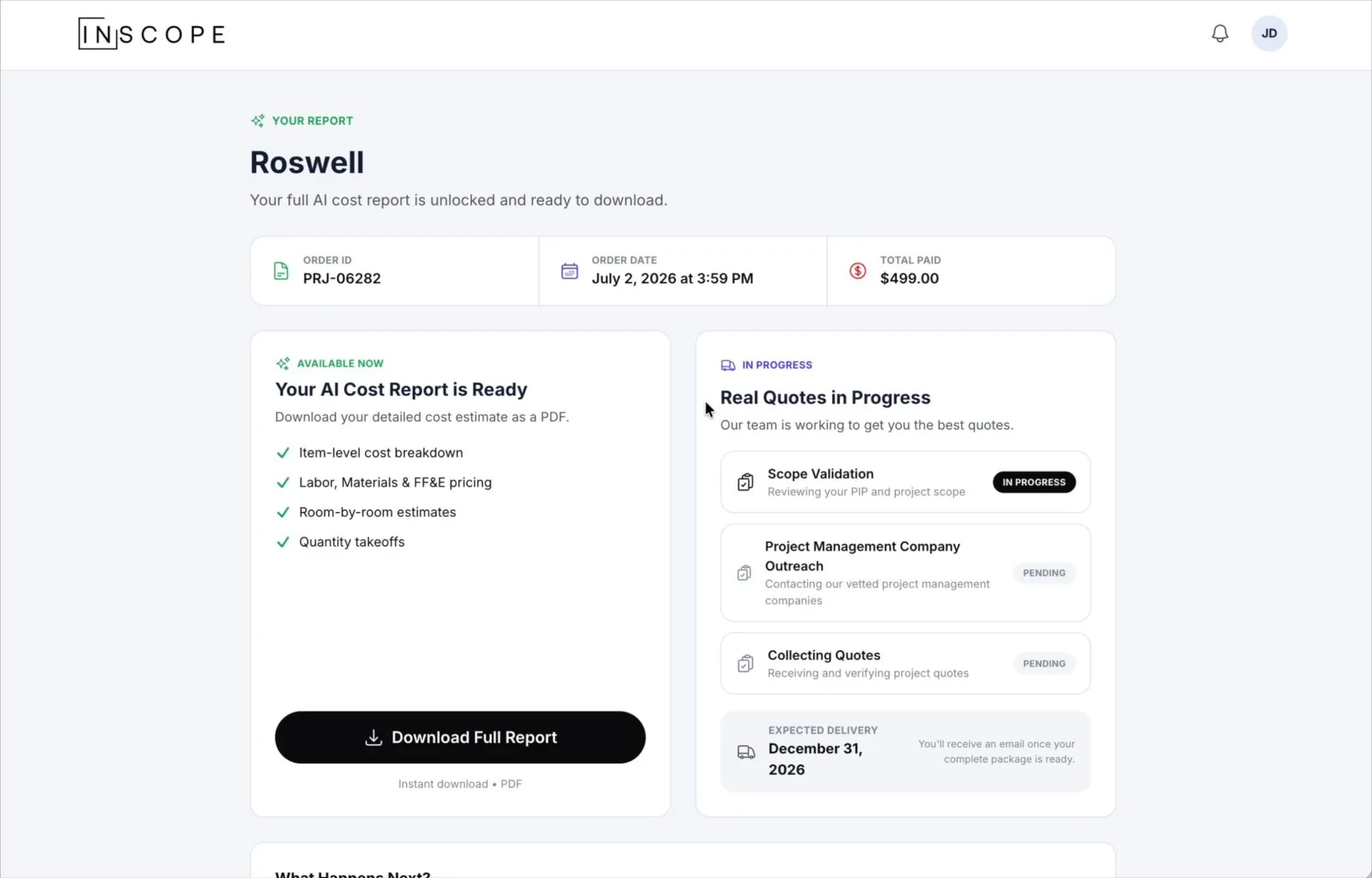
Download the paid report.
04 › What version 1 taught me
Fast, but not trusted
An owner looks at the total and asks why one line costs what it does. Version 1 had no answer.The moment that defined version 2
- Hidden measurementsThe floor areas and heights behind the price were never shown for checking.
- Requirements hard to trace112 detected products in one long list, hard to match back to the PIP.
- No brand contextThe AI didn’t know which hotel brand’s rules applied.
- Stuck waitingLeaving during analysis felt risky.
05 › Version 2
Check first. Then the price.
Six guided steps take an owner from renovation documents to an estimate they can stand behind.
The PIP, floor plans and brand standards become one estimate, built on inputs the owner has reviewed.
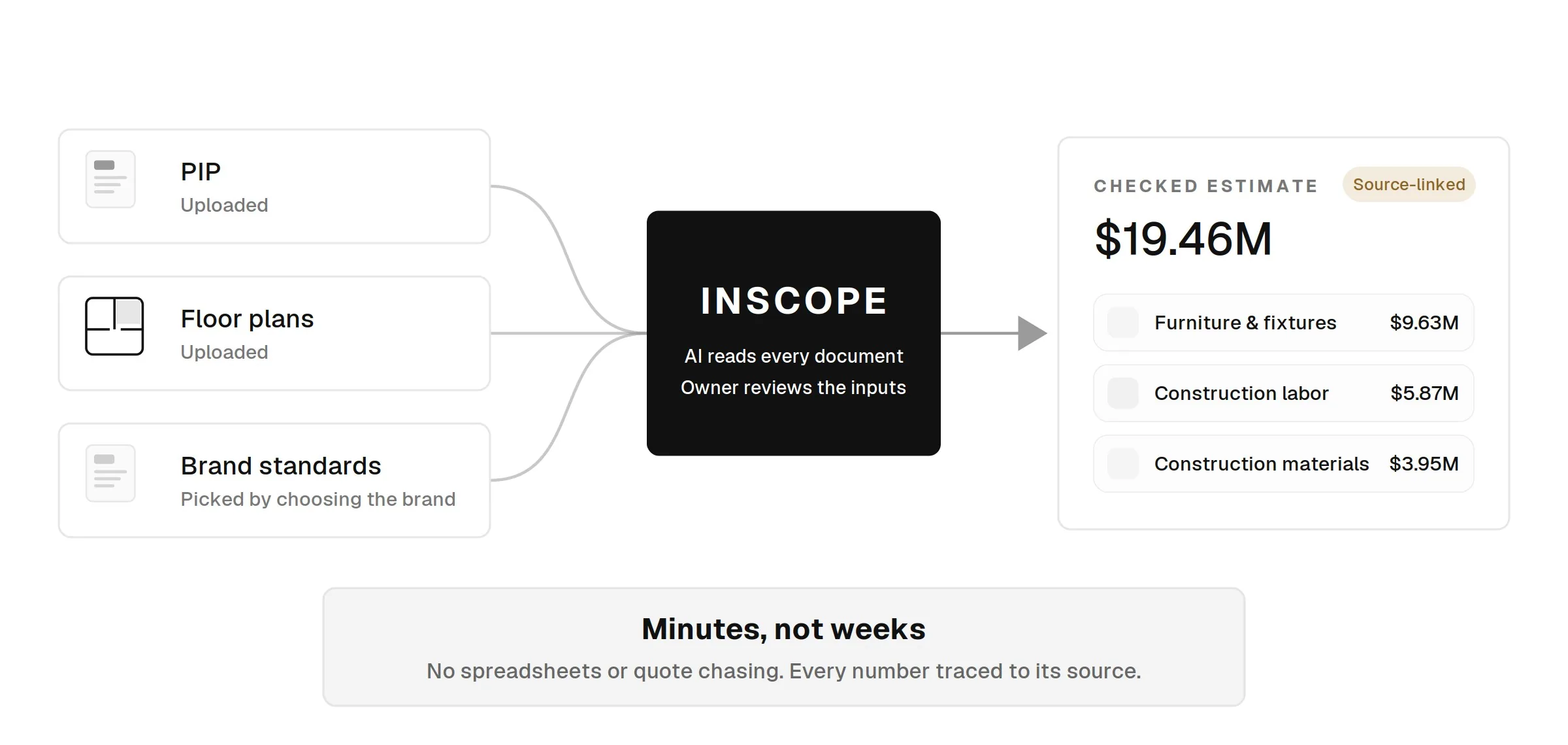
The PIP, floor plans and brand standards become one estimate, built on inputs the owner has reviewed.
Explore the flow
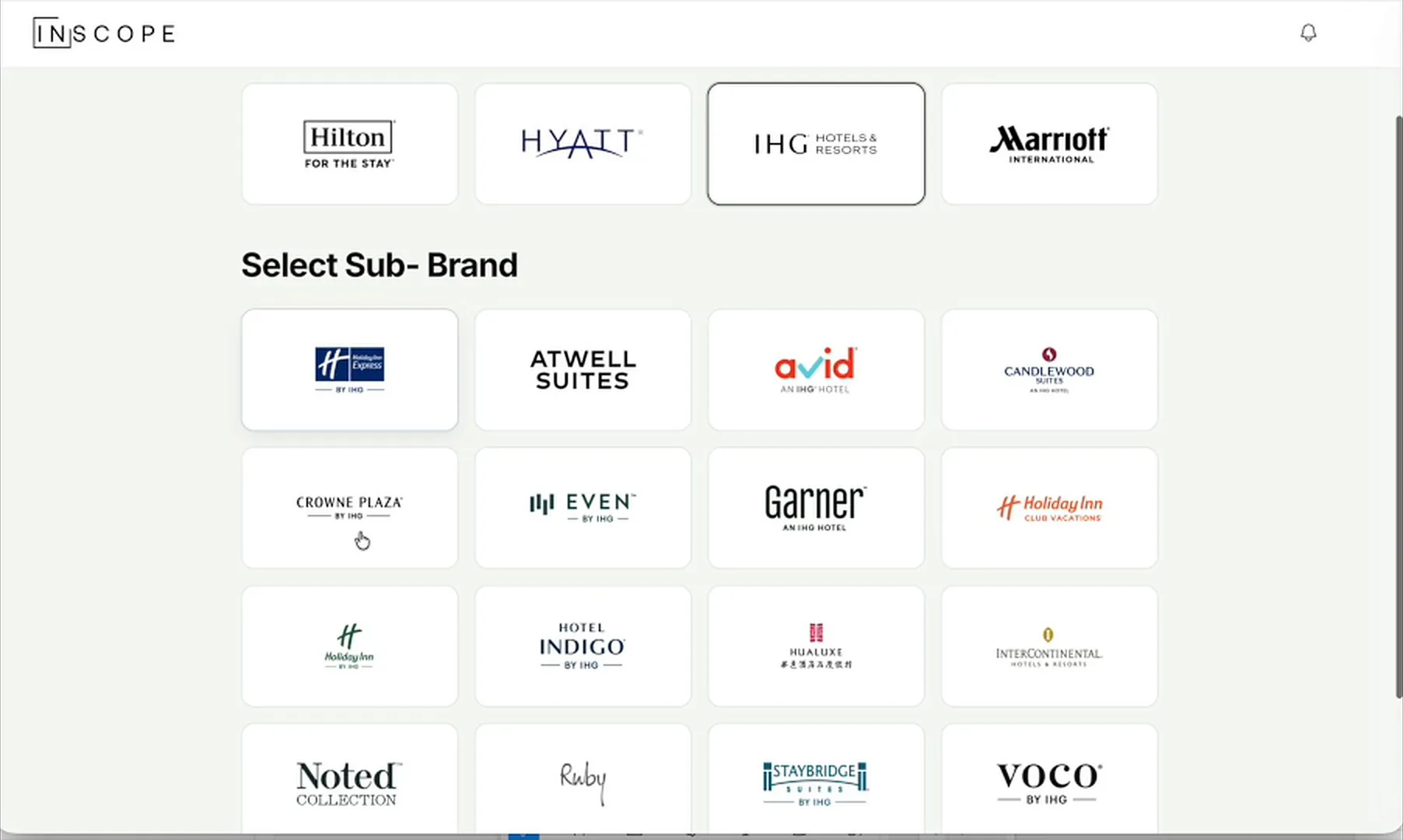
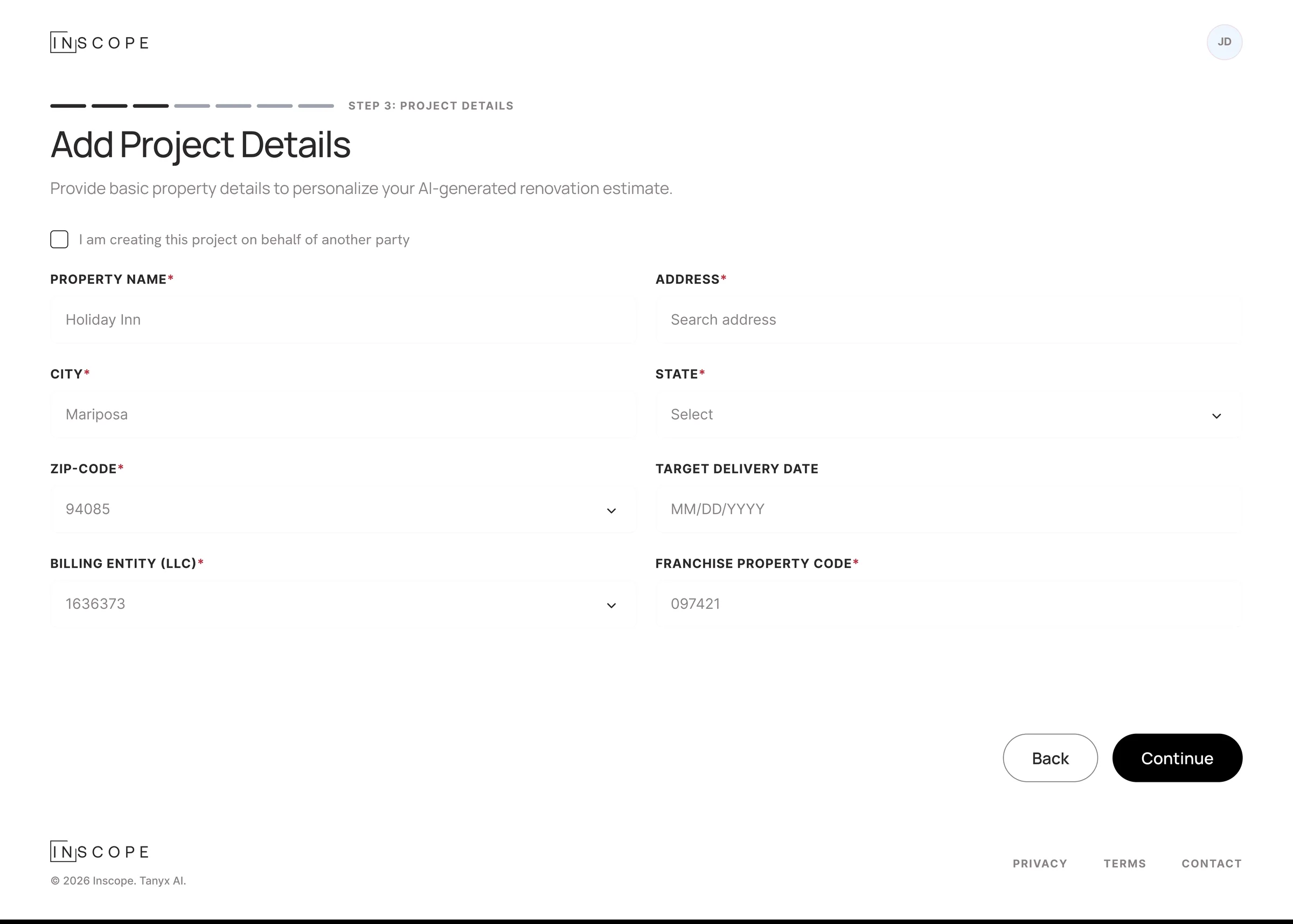
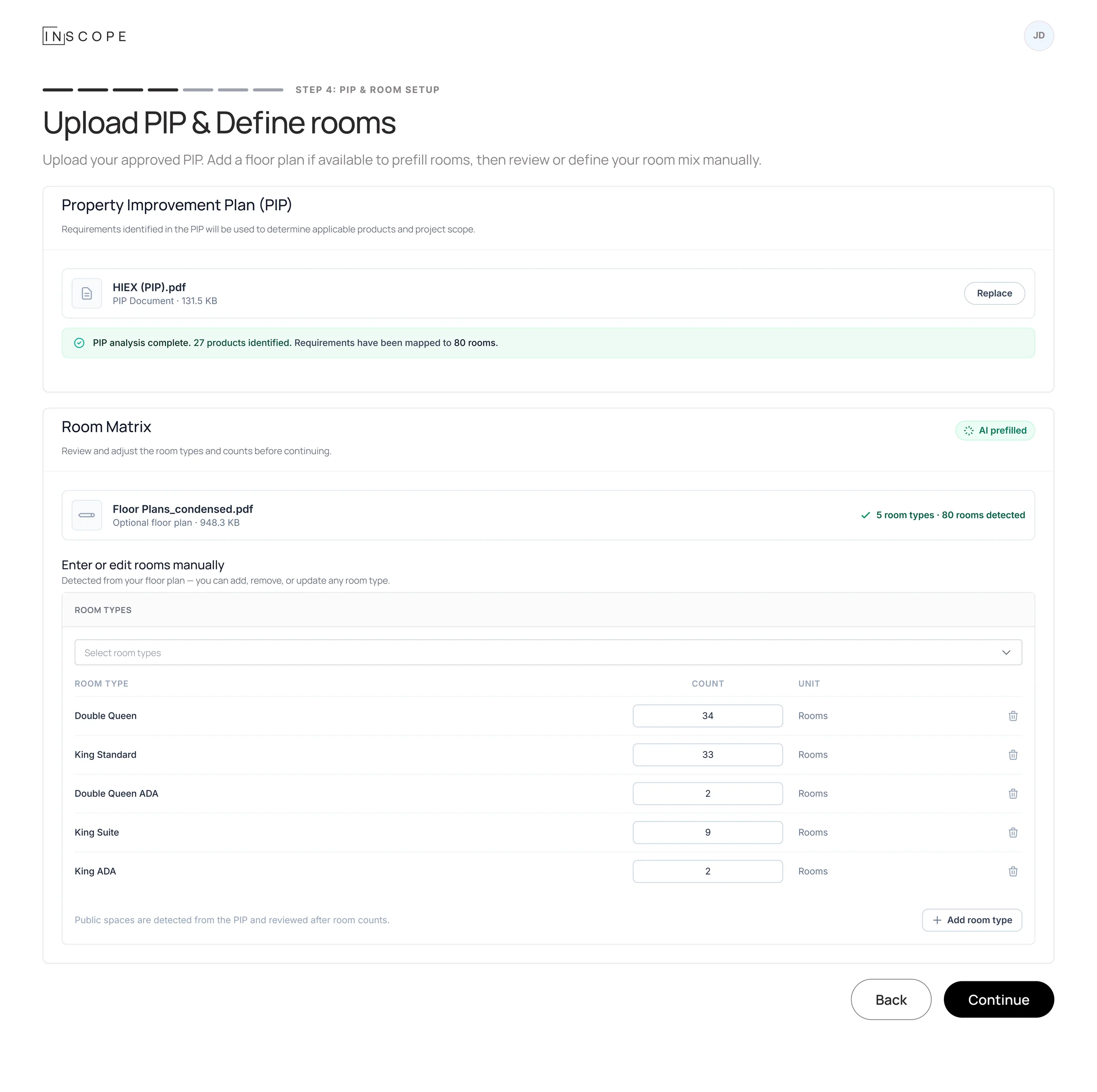
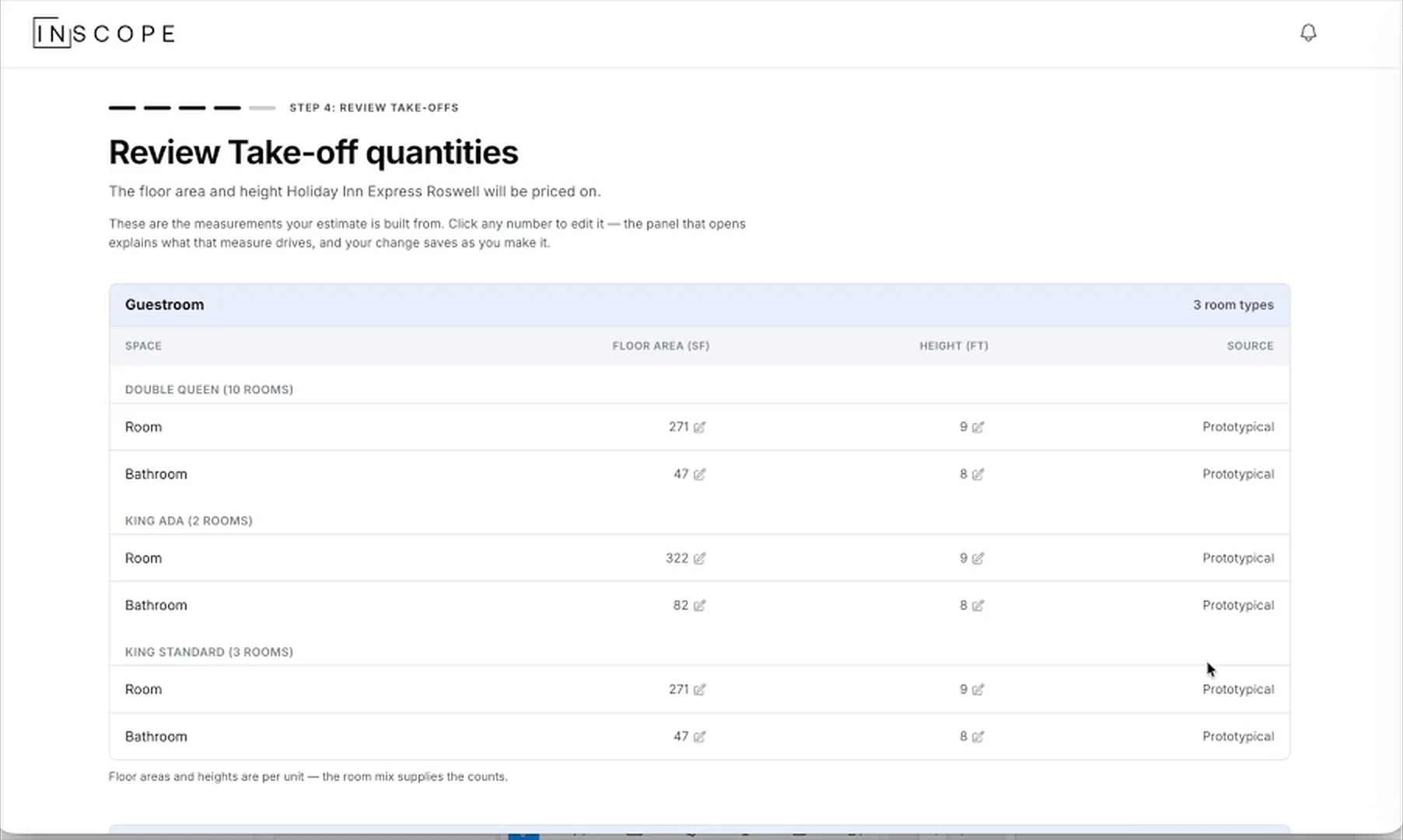
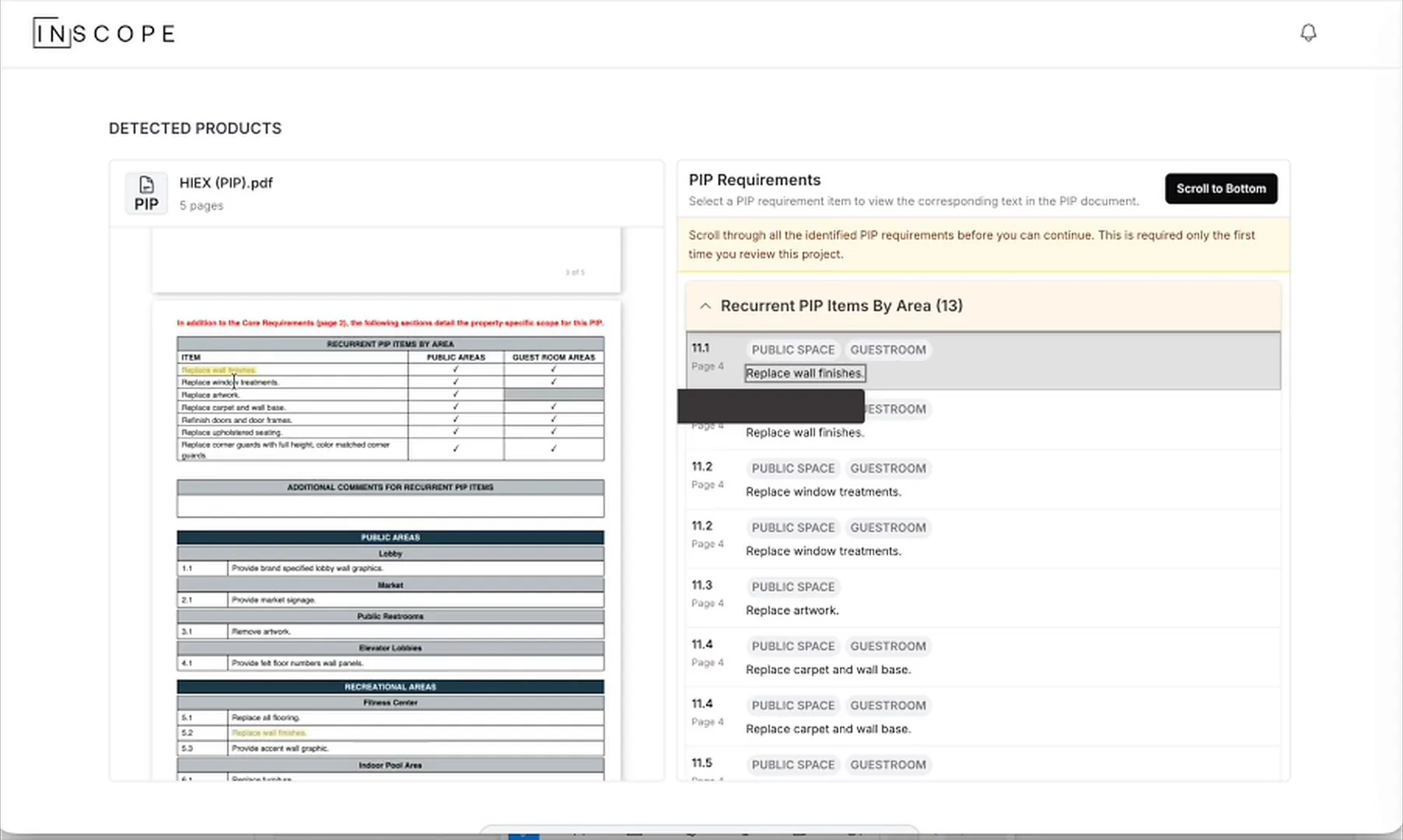
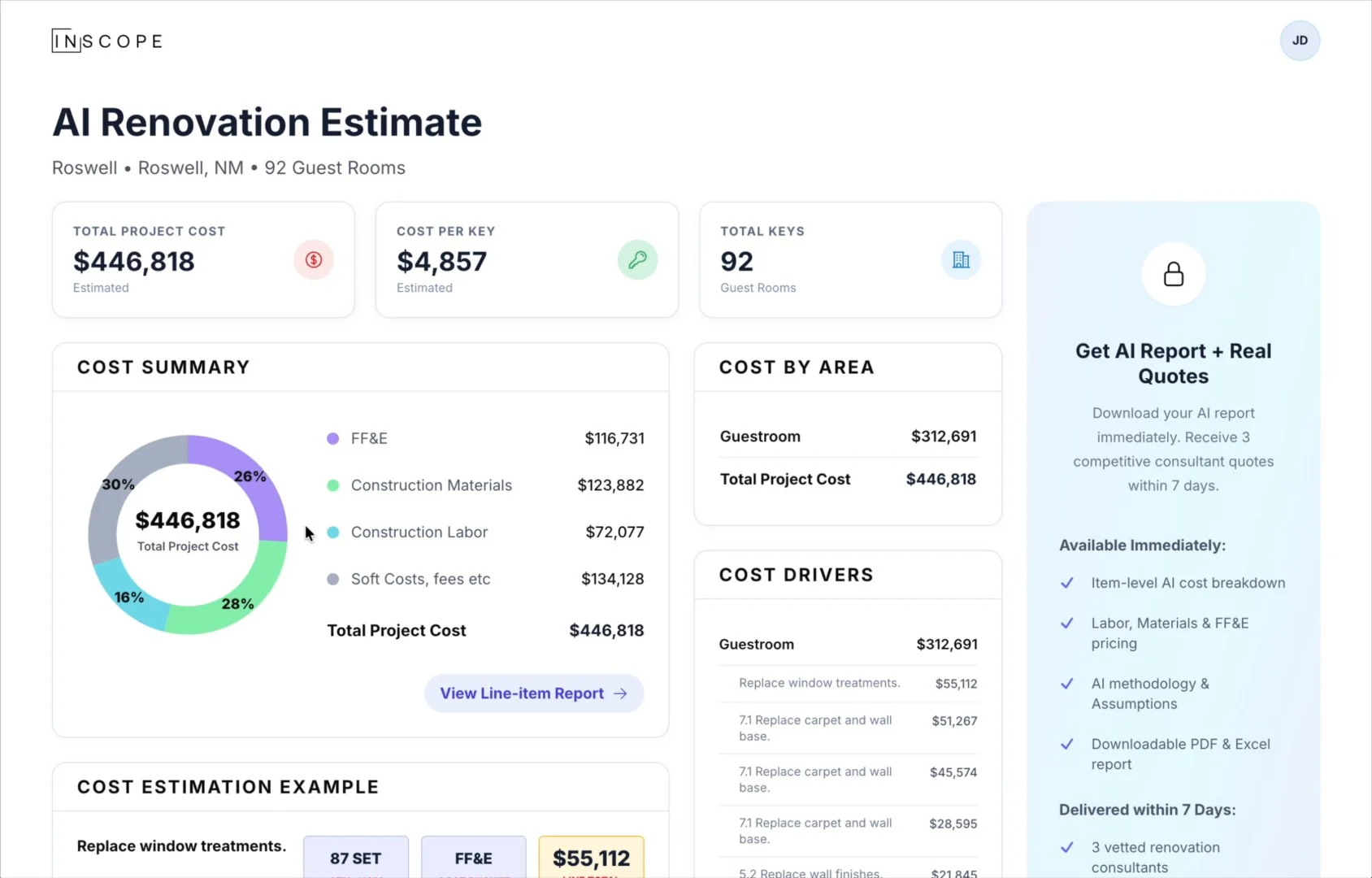
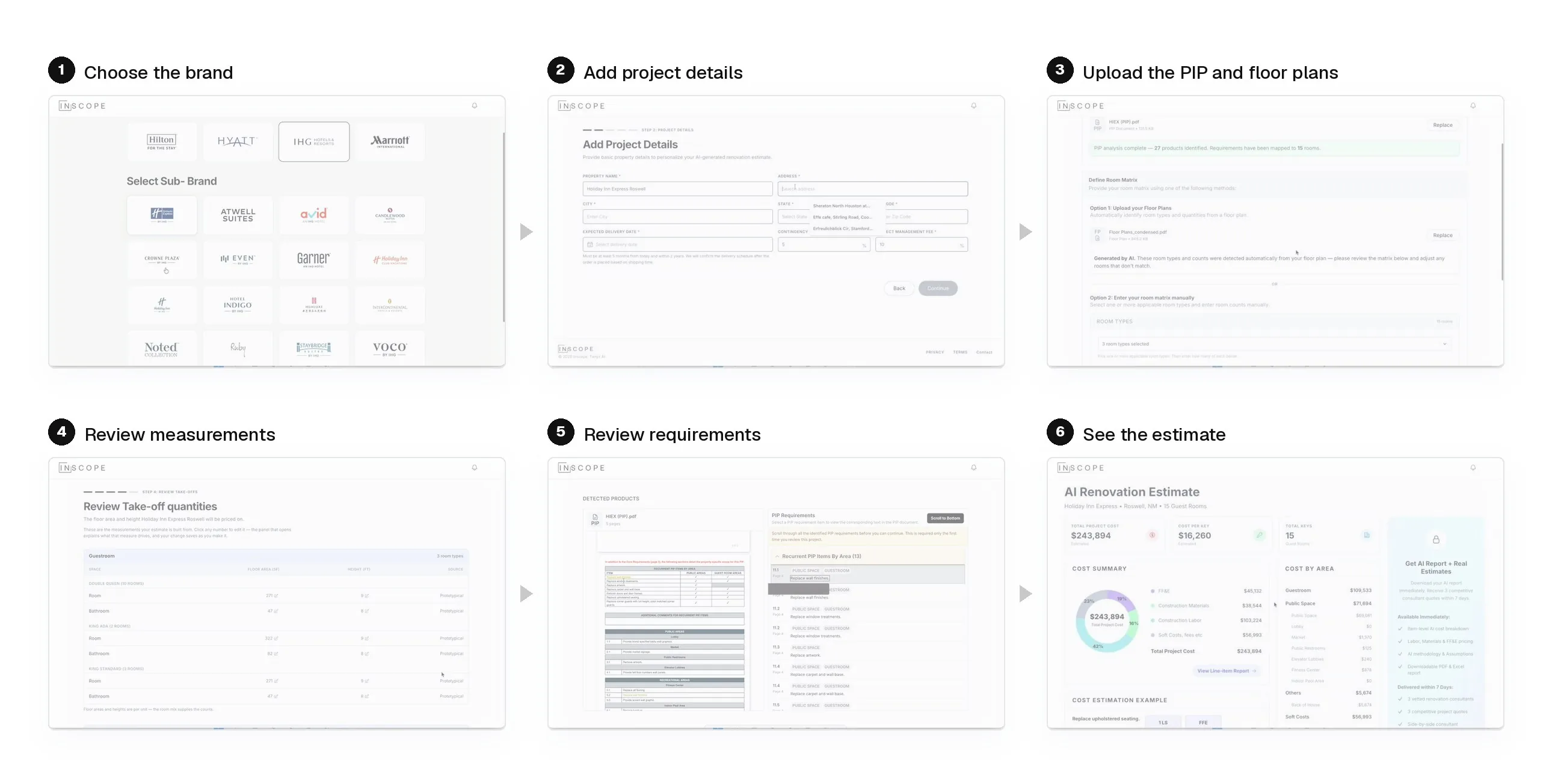
Step by step: brand first, then details, upload, measurements, requirements, estimate.
Details
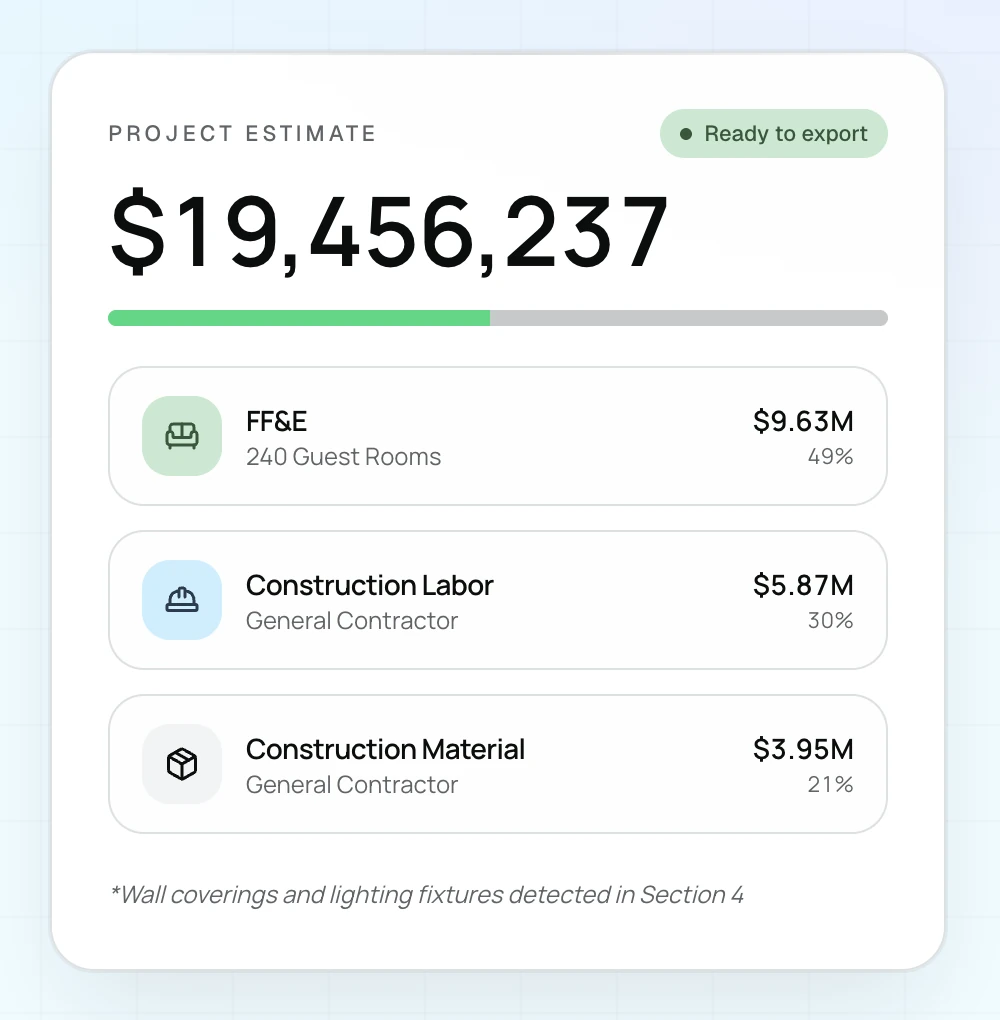
The estimate owners see first, broken down by category.
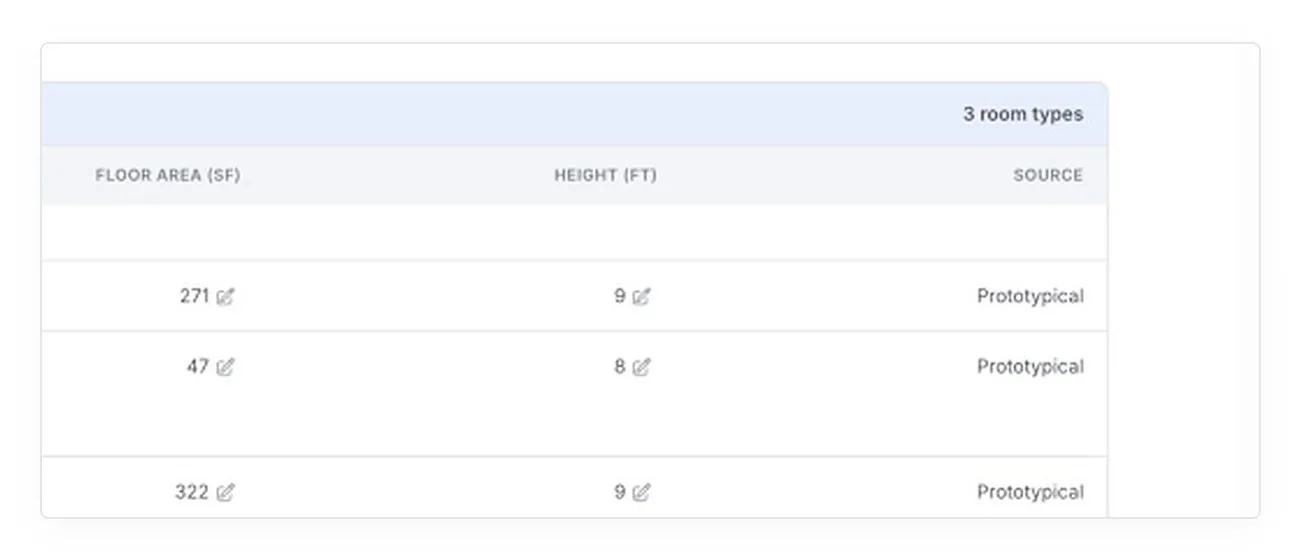
Every measurement shows its source.
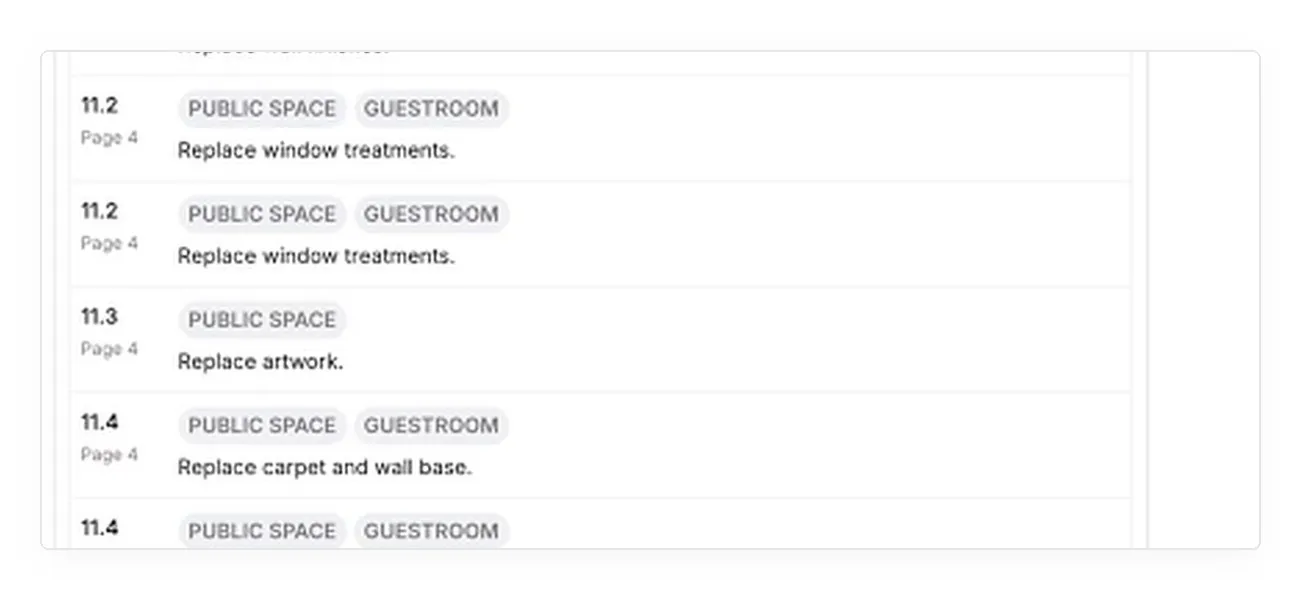
Each requirement is tagged with where it applies.
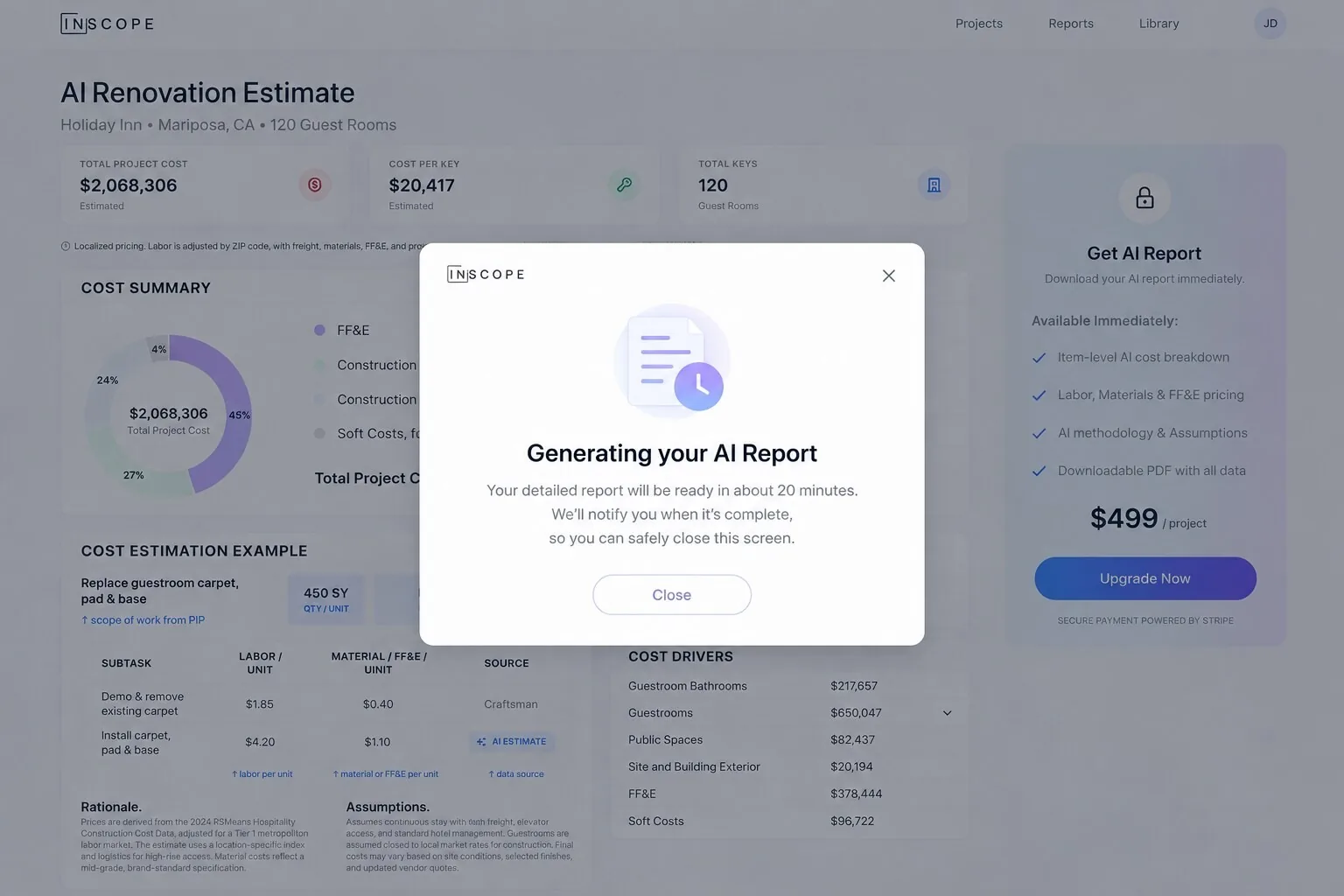
Reports build in the background, with a time estimate and a notification.
Also new
Never trap the owner
Version 1 kept owners waiting on a progress bar. Now the report builds in the background and owners get notified when it’s ready.
06 › Decisions
Three decisions and their trade-offs
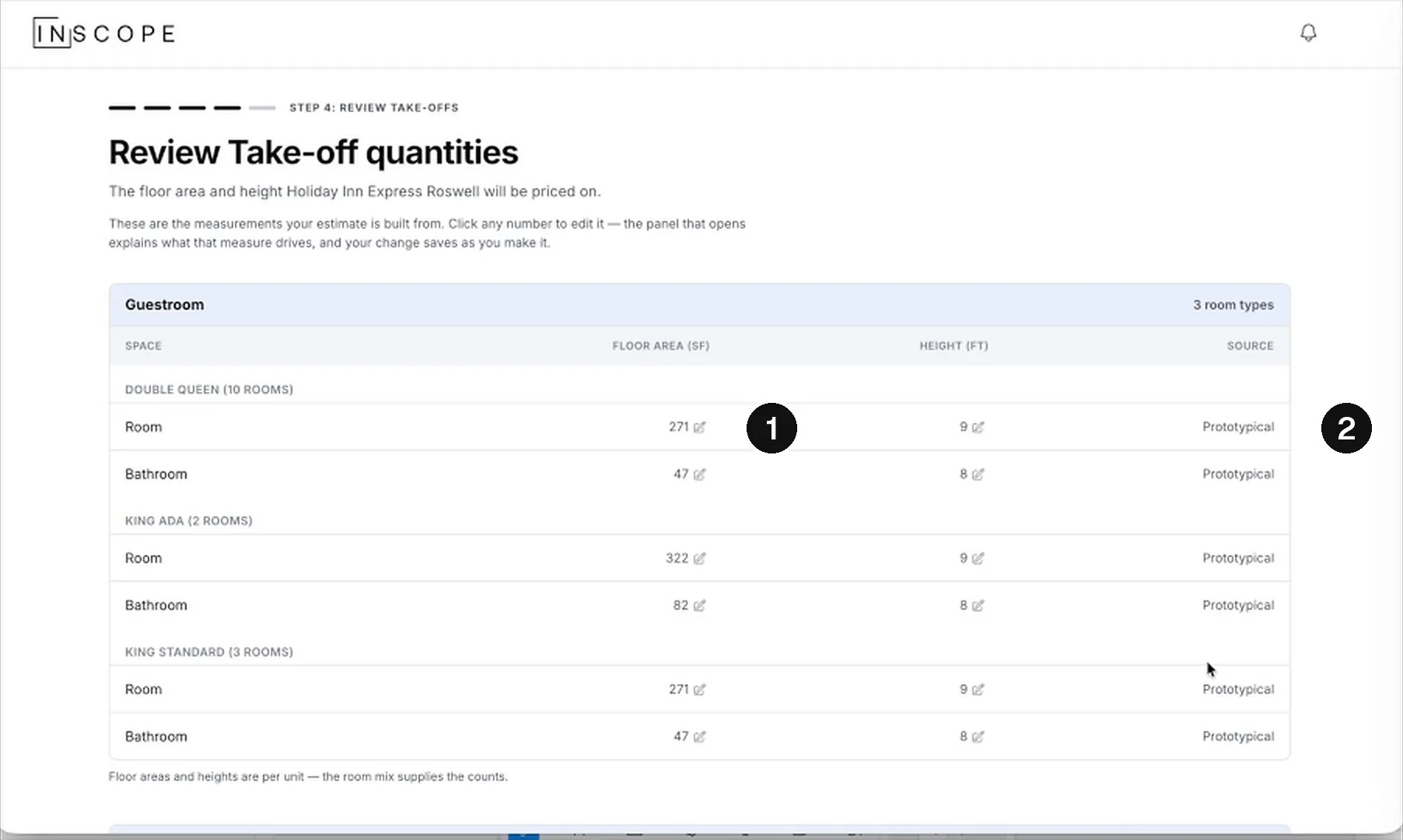
1 Editable numbers · 2 Source label
Decision 1
Show the work before the price
Problem: The floor areas and heights behind the price were hidden inside the AI.
How it evolved · recreated for this case study
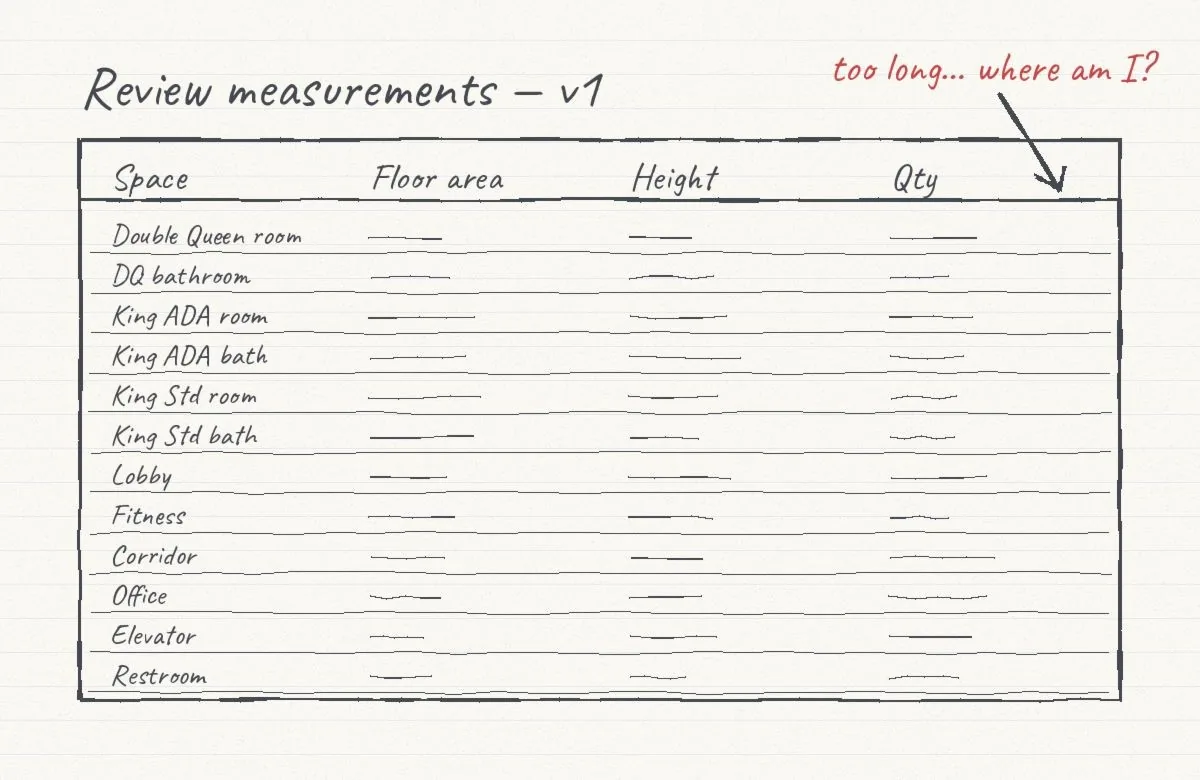
Sketch: one long table. Owners lost their place.
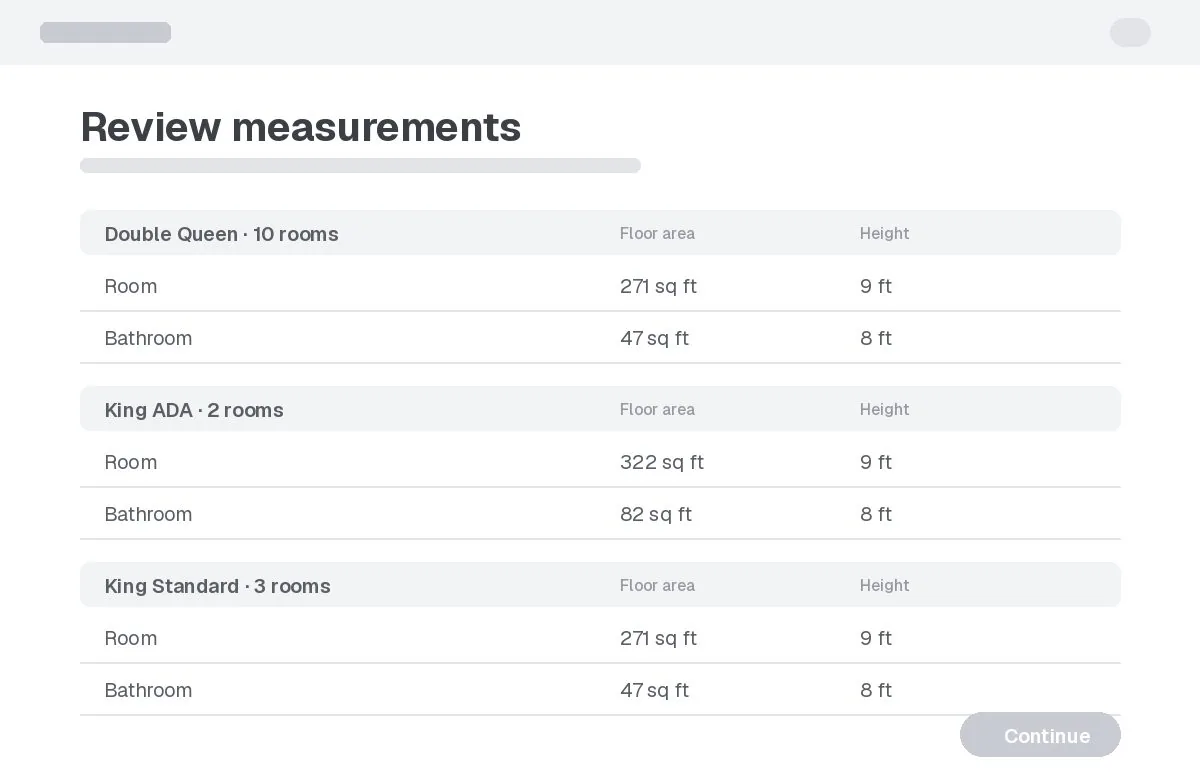
Wireframe: grouped by room type, much easier to scan.
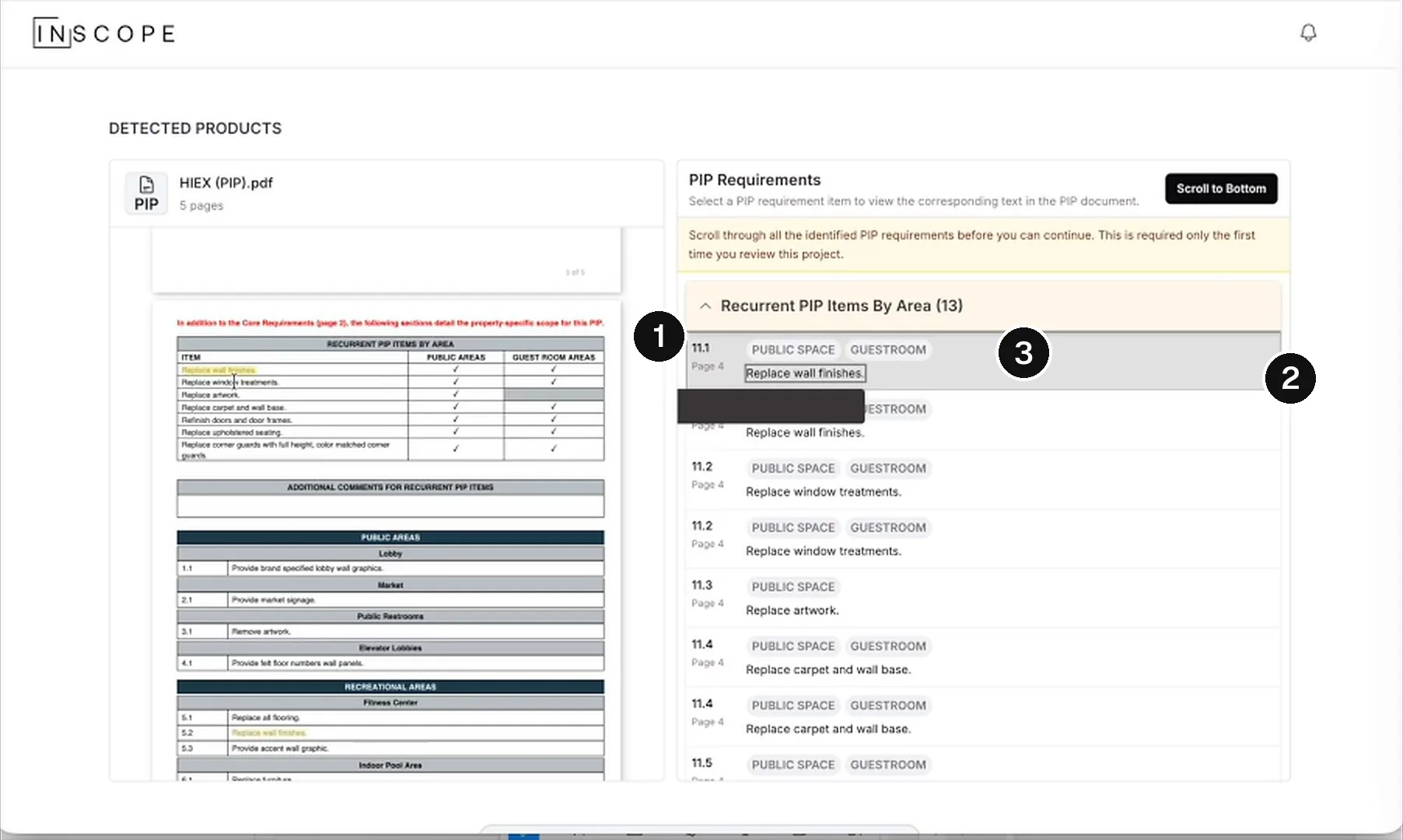
1 PIP page · 2 Requirement · 3 Where it applies
Decision 2
Requirements beside their source
Problem: Version 1 listed 112 detected products in one long list, hard to match back to the PIP.
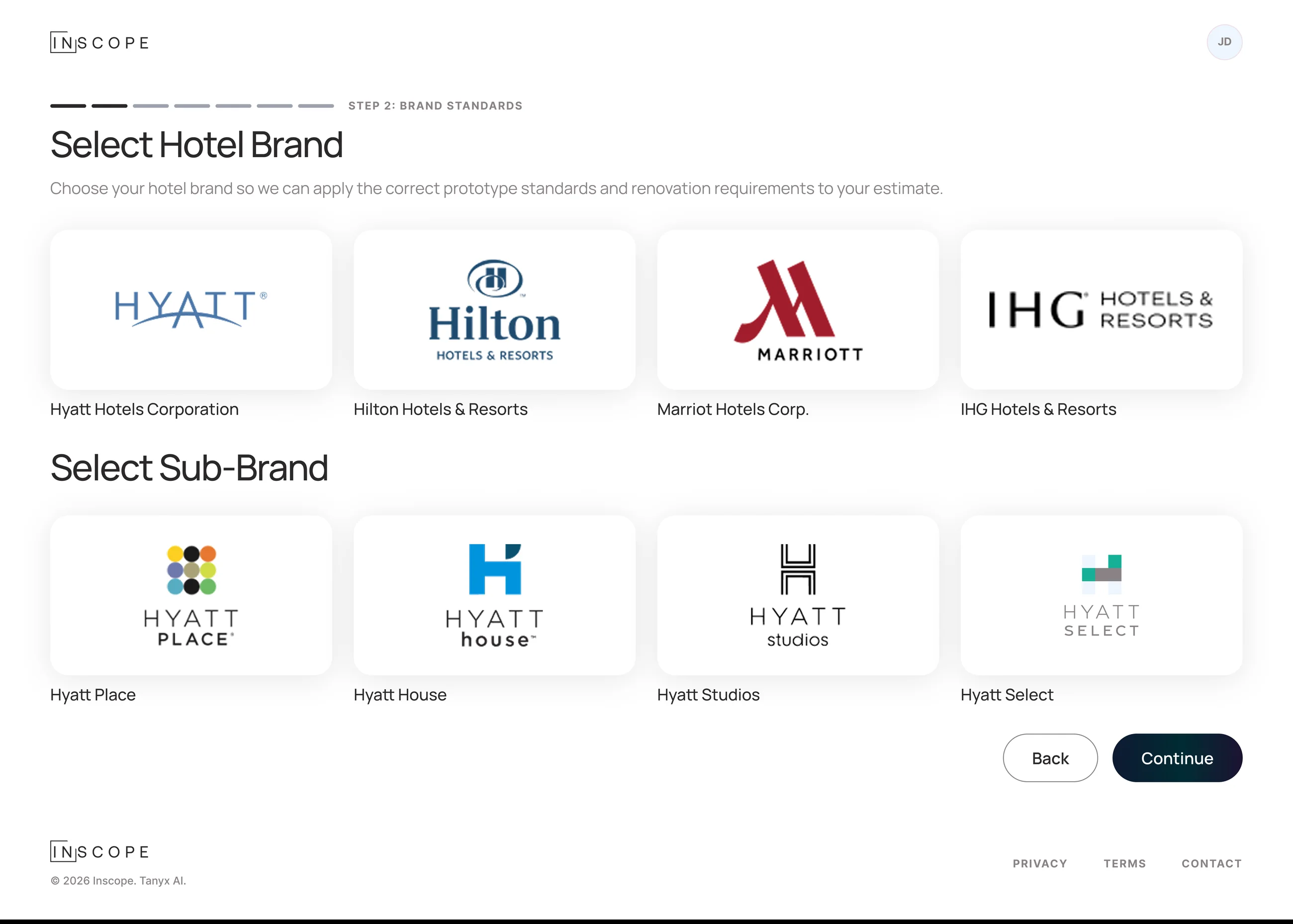
Choose the brand, then the sub-brand.
Decision 3
Start with the hotel brand
Problem: The AI read requirements without knowing which brand’s rules applied.
07 › AI behavior
Designing for when the AI is wrong
A misread PIP or a miscounted floor plan becomes a wrong budget. So every AI output in INSCOPE is visible, traceable and correctable before it turns into money.
01
Show the source
Every requirement the AI extracts stays linked to the highlighted line in the PIP, so owners can check it against the document in one glance.
In the product: Marked “AI extracted” vs “You highlighted”
02
Prefill, never lock
Room counts read from floor plans arrive labeled “AI prefilled” and stay fully editable. Owners can add, remove or change any room type.
In the product: Every AI value is an editable field
03
Say what it found before any cost
The analysis states its scope in plain numbers (“27 products identified, mapped to 80 rooms”) so owners can sanity-check it before the price exists.
In the product: Scope summary before the estimate
04
Corrections flow back in
Owners add a missed product, delete a wrong one, or highlight a line the AI skipped. The estimate is rebuilt from their corrected inputs.
In the product: Add product · Delete · Highlight
08 › Impact
From weeks to an estimate in about 8 minutes.
I designed the end-to-end experience that turns complex hotel renovation documents into actionable cost estimates. By connecting AI-assisted analysis with structured review checkpoints and a clear paid-report offering, I helped balance automation, user control and commercial viability.
TIME TO AN INITIAL RENOVATION ESTIMATE
Average time in production, from uploaded renovation documents to a structured cost estimate.
Tested: in online usability sessions with customers, owners completed the full flow, including both review checkpoints, in about 20 minutes.
09 › Takeaways
What I’d bring to the next 0→1
- Define success before designing.Agreed metrics made every trade-off easier to decide.
- Design the uncertainty.AI earns trust by showing its sources, not hiding its limits.
- Ship to learn, then test with real documents even earlier.Version 1 taught us more in weeks than months of planning.

Got a complex product that needs to feel simple? Let’s talk.
Open to product design and UI/UX roles in AI, SaaS and complex workflows. Bay Area or remote.